Plaform

New Generation Polymer Construction Material for Formwork

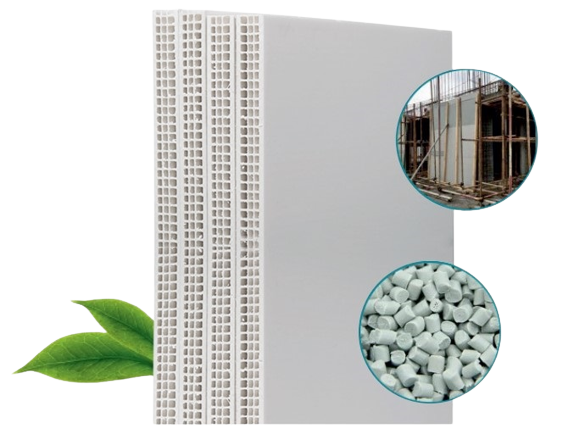
It is a PP-based polymer product that is used for construction formwork. It is more cost effective, lasts longer and gives better finish than existing materials. It contributes to energy saving, it is recyclable, it is nature friendly and helps protect the environment.

Join the construction revolution – Embrace sustainability without compromising on performance. Build smarter, build greener.
...

Discover the Future of Building Molds

Reorganised and improved with high molecular nanotechnology and original “nano-polymer additive”, while improving the durability of this building material to a guaranteed level of hardness, it improves the bending modulus of the template and improves on the problems of the traditional plastic building template. Deformation and wear rate of the template is reduced to 2mm. It is a new product that can replace wooden mold, composite steel mold, bamboo-wood bonding mold and all-steel large mold as a construction formwork material. It is energy saving and protects the environment.

Enhanced Durability

Guaranteed hardness and improved bending modulus.

Precision Performance

Reduces deformation and wear rate to an unprecedented 2mm.

Eco-Friendly

Contributes to energy savings and protects the environment.

Versatile Alternative

Replaces traditional steel, wood, and composite molds.

Cost-Effective

Maintains a constant cost with minimal wear.

Plaform Specifications and Variants

Discover the standardised dimensions, compatibility features, and versatile thickness options of Plaform, designed to offer precision and adaptability for diverse construction needs.

Plaform Variants
Thickness (mm) Width (cm) Length (cm)
12 125 250
15 125 250
18 (Standard) 125 250
21 125 250

Production Standard

The standard size for Plaform is 18 mm in thickness, 125 cm in width, and 250 cm in length. This standardised dimension ensures consistency and compatibility across various construction applications, allowing for seamless integration into building projects. Its specific measurements—18 mm x 125 cm x 250 cm—provide a reliable foundation for creating precise and uniform building components.

Compatibility with Plywood

Plaform is designed to work seamlessly with 18 mm plywood, offering versatility and flexibility in construction applications. This compatibility allows for the integration of Plaform with existing construction materials, enhancing its adaptability for various building needs.

Available Thickness Variations

In addition to the standard 18 mm thickness, Plaform is available in different thickness options to cater to diverse construction requirements. The available thickness variations include 12 mm, 15 mm, 18 mm (standard), and 21 mm. This range of thickness options provides builders and architects with the flexibility to select the most suitable Plaform variant based on the specific structural demands and design preferences of their projects.

Usage Areas

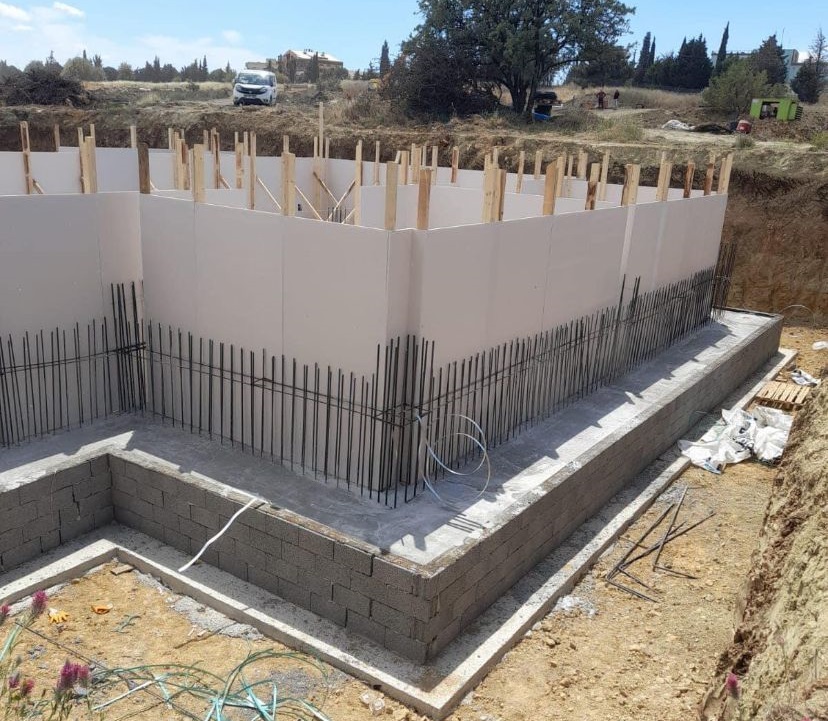
It is a product that can be used in various sectors, especially in construction formwork. The surface performance is at the maximum level in re-use or after use, depending on the usage conditions in the construction site, the concrete surface and many factors. Plaform is recommended for floors with a material static concrete thickness of up to 25 cm, at intervals of 25-30 cm.

DPC, Decking & Retaining Walls

In mold works, Scaffolding platforms, Interior partition and roofing works, Floor and parquet industry.

Beams & Columns

Platform is a useful resource, pivotal for erecting beams and columns. It could serve as workspace for assembly, providing a stable area for lifting and reinforcing structural elements. Platform guarantees alignment, precision and easy access for construction teams and equipment during installation.

Civil Construction

Platform plays a fundamental role in civil projects, serving as multifunctional staging areas. It facilitates material storage, machinery placement, and construction assembly. Offering safe access, it enables efficient execution of tasks like formwork setup, concrete pouring, and site preparation, crucial for roads, bridges, and civil engineering structures.

Advantages and Benefits

Plaform offers a multitude of advantages that revolutionise the construction process, ensuring durability, efficiency, and environmental responsibility.

Icon

It provides maximum productivity in the mold with its ideal size and can be used with plywood.

Icon

PP-based compared to 1st generation PVC-based polymer construction molds, produced with new generation technology.

Icon

There is no adherence between the polymer surface and concrete, thus it does not stick to the concrete which gives a smooth concrete surface.

Icon

Like plywood, it can be cut and nailed. It is lightweight and easier to install and it can be easily cleaned with water.

Icon

Unlike Plywood, there is no deformation problem due to scratches.

Icon

It is resistant to all kinds of climatic conditions.

Icon

Since its recycling is based on weight, even the smallest part is not wasted.

Icon

It is long-lasting; it lasts much longer than its counterparts even in the most challenging construction sites.

Icon

It has the highest impact resistance level, it won't break even if it falls from height.

Icon

It can be used in columns, curtains, floors and beams. It is also very suitable for circular curtain manufacturing since it regains its form after stretching.

Icon

It can be stacked in any environment and is not affected by unfavorable strong conditions (water, humidity, insects, etc.).

Installation Guides & Tips

Ensuring proper installation is key to maximizing the benefits of Plaform in construction projects. Follow these guidelines for a successful installation.

...
Surface Preparation

Before laying Plaform, ensure the surface is clean, level, and free from debris. Smooth surfaces enhance the mold's effectiveness and result in precisely built components.

...
Secure Placement

Securely position the Plaform on the designated area, ensuring it sits evenly without any gaps or uneven spaces. Use suitable adhesives or fasteners for a stable foundation.

...
Compatibility Check

When using Plaform with 18 mm plywood, ensure a snug fit and proper alignment between the materials. This compatibility ensures seamless integration and enhances structural stability.

...
Adherence to Specifications

Adhere strictly to Plaform's standardised dimensions (18 mm x 125 cm x 250 cm) for consistent and accurate building elements. Avoid altering the dimensions to maintain uniformity.

...
Optimal Usage

Utilise the appropriate thickness variant based on the specific requirements of your construction project. Thicker variants might be suitable for heavier load-bearing structures, while thinner ones may suffice for lighter applications.

...
Regular Maintenance

Periodic inspection and cleaning of Plaform contributes to its longevity and performance. Ensure the mold is well-maintained to uphold its durability over time.

...
Consultation and Training

For large-scale projects or new users consider seeking professional consultation or training to ensure optimal use of Plaform. Proper training enhances efficiency and reduces errors during installation.

...
Environmental Considerations

Dispose of used Plaform responsibly adhering to local recycling guidelines or reusing it whenever possible. This aligns with Plaform's commitment to environmental sustainability.